


Department of Forensic Science
About the Department
Uncovering truth through science
Established in 2019, our department offers a multidisciplinary approach to forensic science, combining chemistry, biology, physics, and law to train the next generation of forensic experts.
About forensic science
Forensic science is the application of scientific knowledge and methodology to criminal investigations and legal matters. It is a multidisciplinary subject, encompassing chemistry, biology, physics, geology, psychology, engineering, and more.
forensis — Latin for "of or before the forum"The term originates from Roman times in the late 19th century. Forensic scientists collect, preserve, and examine physical evidence, investigate crime scenes, and conduct testing on suspected items. A forensic scientist must be methodical, accurate, and unbiased.
Forensic science is used worldwide to protect public health and crime victims, enforce criminal laws and regulations, and resolve civil disputes.
Why forensic science?
If nothing bothers you more than injustice and chemistry, biology, and physics are among your favourite subjects — a degree in Forensic Science might be a match made in heaven. As a future forensic expert, you'll work in crime labs, examine physical evidence, analyse crime scenes, and make life easier for investigating officers solving cases.
The scope of forensic science is enormous. You can get jobs in both government and private sectors, start freelancing, or establish your own forensic service office. The need and scope have grown exponentially due to the surge in criminal activities and the demand for timely justice to victims.
Some forensic scientists visit crime scenes to collect and preserve evidence, while others work in forensic laboratories — regional, state, central, or private — to perform analysis on evidence samples. They testify in courts as expert witnesses in criminal and civil cases, for either the defence or prosecution.
Career opportunities
Trained forensic scientists are employed across a wide range of sectors both in India and abroad:
| CBI & IB | Forensic labs | Police dept. | Narcotics dept. |
| Detective offices | Intelligence agencies | Hospitals | Banks & private firms |
A trained forensic scientist may also be hired by the CBI & Intelligence Bureau, work as a freelancer, or serve as a legal counselor with advocates after gaining sufficient experience — all with strong earning potential.
Department of Forensic Science · Est. 2019
Department has a well-equipped Forensic Lab including Forensic Chemistry, Digital & Cyber Forensic, Document Examination, and Forensic Anthropology.
Recent Events

Department of Forensic Science is celebrating their Freshers' day.
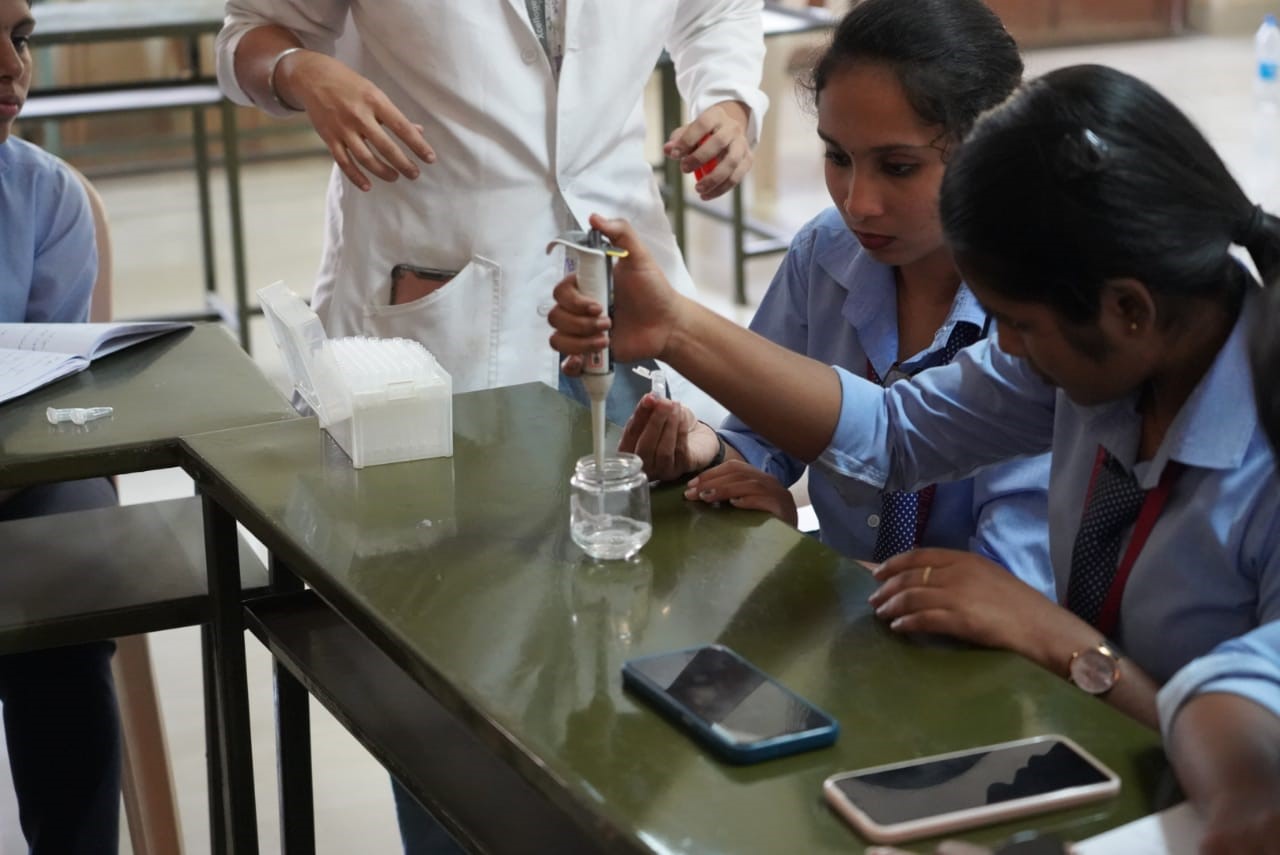
The Paradox Club, Department of Forensic Science, hosted a groundbreaking workshop titled "Unlocking Research Potential: Two Days Hands-On Training on DNA Extraction and PCR Techniques" on March 8th and 9th, 2024. This enlightening event aimed to provide participants with practical insights and skills crucial for advancing research in the field of forensic science.
Distinguished experts from Xcellogen Biotech India Pvt Ltd, including Mr. Anooj ES (Managing Director), Mrs. Athira SP (Laboratory Head), Ms. Reshma M Pillai (Research Assistant), and Ms. Christy Roy (Research Assistant), led the sessions. Their wealth of experience and expertise ensured a comprehensive learning experience for the attendees.
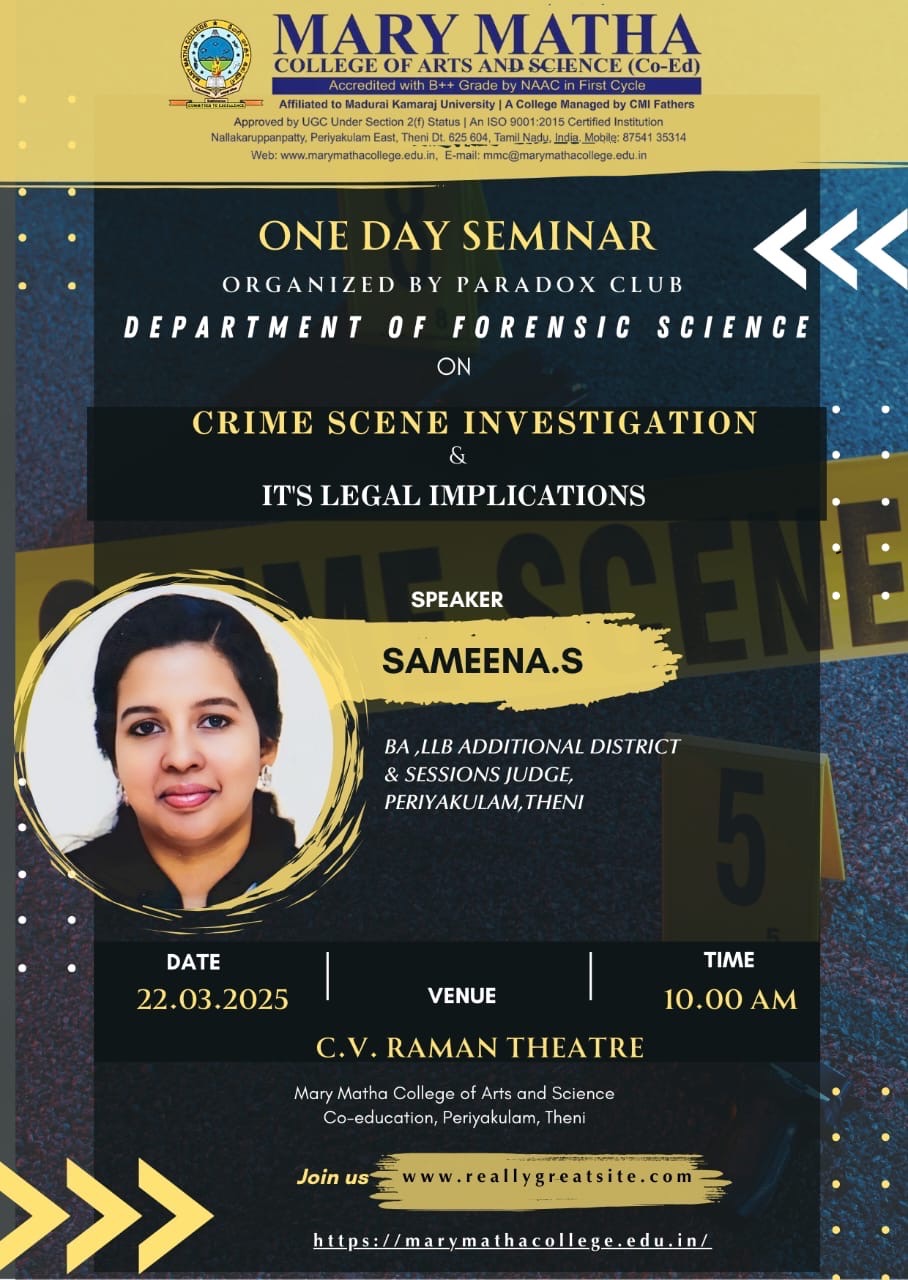
This seminar will highlights the practical implications of Forensic Science in the courtroom. Resource person will explain how proper crime scene investigations and evidence collections helps the prosecution and defence in the courtroom during trial.
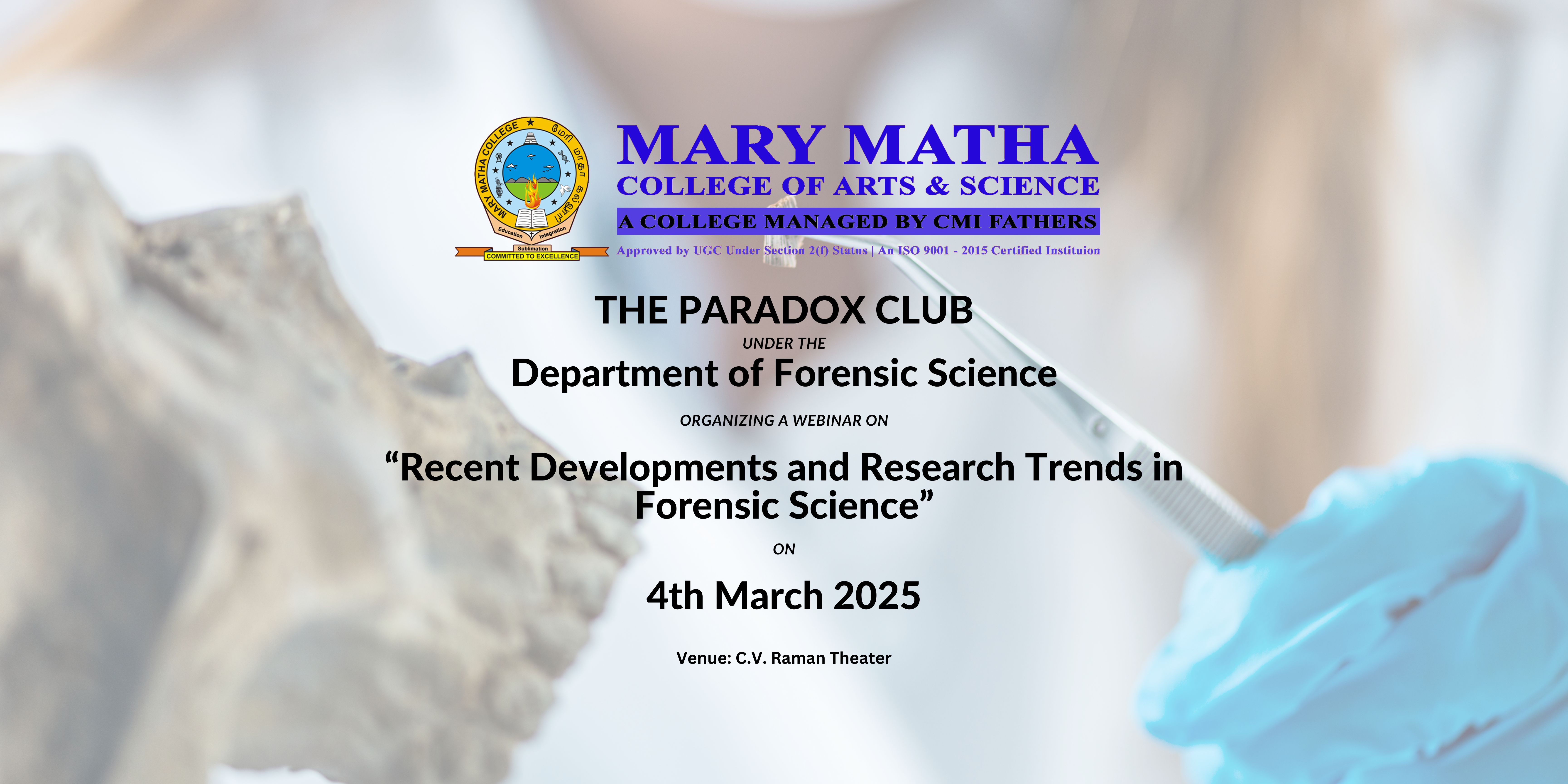
The One-Day Webinar on Recent Developments and Research Trends in Forensic Science, organized by the Department of Forensic Science on 4th March 2025, aims to provide students, researchers, and forensic professionals with valuable insights into the latest advancements in the field. The webinar features two expert-led sessions: Dr. Amarnath Mishra will discuss recent developments and research trends in forensic science, highlighting emerging technologies and methodologies, while Dr. Abhinav Sood will delve into next-generation fingerprint technologies, offering a deeper understanding of modern forensic identification techniques. This webinar will be highly beneficial for students as it will enhance their knowledge of contemporary forensic practices, expose them to real-world applications, and inspire them to explore research opportunities. Participants joining via Google Meet or YouTube Live will receive digital certificates, adding value to their academic and professional credentials. By engaging with leading experts, students will gain a competitive edge in forensic science, preparing them for future research, careers, and innovations in the field.
Join Now or use Google Meet Link: https://meet.google.com/wsg-nywi-xtn
Also Watch on YouTube Live
Digital Certificates will be provided for all who will join through Google Meet or YouTube Live
Session 1 will be held from 10:00 AM onwards by Dr. Amarnath Mishra on the topic "Recent Developments and Research Trends in Forensic Science".
Session 2 will be held from 2:00 PM onwards by Dr. Abhinav Sood on the topic "Next-Generation Fingerprint Technologies".
Staff Profiles
Other Staff Profiles
Staffs from other departments taking class for English, Part-1 Languages and other cross-major subjects.

DR. S. SARKUNA
Assistant Professor, Dept. of

MS. A. NANDHINI PRABHA
Assistant Professor, Dept. of

MS. NEHA K. SEBASTIAN
Assistant Professor, Dept. of
B.Sc. Forensic Science
Forensic sciences
Forensic Sciences includes essential components such as Forensic Pathology, Psychiatry, Psychology, Forensic Medicine and Odontology (Dentistry). It is chiefly laboratory-based science consisting of related elements of Chemistry, Biology, Toxicology, Ballistics, the Science of Fingerprinting, Questioned Documents and Impressions.
The discipline involves crime scene investigation including fire and explosion scenes and drug laboratories. The subject applies scientific knowledge to aid in the administration of justice, and has no boundaries as far as subjects are concerned — it makes use of all faculties of science, such as Physics, Chemistry, Biology and Medicine, among others.
What the field demands
Technical skill can be developed through the curriculum. However, intelligence and aptitude required in solving a crime by viewing it from various angles needs to be developed through practical exposure. Good academic skills with fundamental knowledge of various fields of science is necessary.
The field also demands an eye for detail, strong analytical skills, keen observation and scientific investigations. The ability to work with experts from other fields such as Psychology, Social Science, Non Clinical experts and Statistics is a must. Ideal candidates would be comfortable working both indoors and outdoors.
Ideal skill sets
| —Good hold on science subjects (especially Biology and Chemistry) | —An enquiring mind | |
| —High degree of accuracy and attention to detail | —Observation skills | |
| —Patience | —Ability to work under pressure for long hours | |
| —Team spirit |
B.Sc. Forensic Science & Criminology
Forensic sciences & criminology
Forensic Sciences and Criminology includes essential components such as Forensic Pathology, Psychiatry, Psychology, Forensic Medicine and Odontology (Dentistry). It is chiefly laboratory-based science consisting of related elements of Chemistry, Biology, Toxicology, Ballistics, the Science of Fingerprinting, Questioned Documents and Impressions.
The discipline involves crime scene investigation including fire and explosion scenes and drug laboratories. The subject applies scientific knowledge to aid in the administration of justice, and has no boundaries as far as subjects are concerned — it makes use of all faculties of science, such as Physics, Chemistry, Biology and Medicine, among others.
What the field demands
Technical skill can be developed through the curriculum. However, intelligence and aptitude required in solving a crime by viewing it from various angles needs to be developed through practical exposure. Good academic skills with fundamental knowledge of various fields of science is necessary.
The field also demands an eye for detail, strong analytical skills, keen observation and scientific investigations. The ability to work with experts from other fields such as Psychology, Social Science, Non Clinical experts and Statistics is a must. Ideal candidates would be comfortable working both indoors and outdoors.
Ideal skill sets
| —Good hold on science subjects (especially Biology and Chemistry) | —An enquiring mind | |
| —High degree of accuracy and attention to detail | —Observation skills | |
| —Patience | —Ability to work under pressure for long hours | |
| —Team spirit |
M.Sc. Forensic Science & Criminology
M.Sc. Forensic Science and Criminology
M.Sc. Forensic Science and Criminology involves the application of scientific knowledge to the investigation of crimes. Professionals in this discipline analyze evidence found at a crime scene, drawing insights from social and behavioral sciences, physical sciences, statistics, and the humanities to illuminate issues of maintaining social order in a constitutional democracy committed to individual freedom, equality and justice.
After 3 years of intensive study of foundational disciplines, students train as Cyber Forensic Expert, Forensic Scientist and Criminal Investigator alongside students of the Institute's 2-year Post Graduate Programme in Science (M.Sc.), undertaking the same course package in Forensic Science in years 4 and 5.
The program prepares students for careers in public security, criminal justice administration, law and paralegal professions, public administration, policy analysis, and graduate study in those fields. The M.Sc. programme will also assist students to develop and apply research expertise towards the resolution of contemporary justice practice and policy issues.
The first course of its kind offered in Madurai Kamaraj University — a unique opportunity for rural youth aspiring to careers as jury consultants, counselors, social workers, and prison psychologists.
Eligibility for admission
A candidate for admission shall have passed any undergraduate degree under a science discipline. Accepted subjects include:
| —Mathematics | —Physics | —Chemistry | ||
| —Botany | —Zoology | —Computer Science | ||
| —Biotechnology | —Genetic Engineering | —Psychology |
Any other science discipline with minimum one science subject, issued or accepted by the Government of Tamil Nadu, Madurai Kamaraj University, or any other recognized Board or University. Admission is based solely on merit — aggregate marks in major core subjects.
Age limit
|
25 years
Maximum age for general category candidates
|
28 years
Maximum age for SC/ST candidates (3-year relaxation)
|
Student Projects
| # | Student Name | Project Title | View |
|---|