Microbiology is defined as the study of organisms and agents that are too small to be seen clearly by the unaided eye. To be simpler, microbiology is the study of microorganisms which are living organisms of microscopic size. Microorganisms are living organisms and their size, for instance, bacteria ranges in size from 0.2 x 0.5 micrometers to 0.3 x 2.0 micrometers and cannot be seen by our naked eyes. Microorganisms can be viewed through microscopes and they can exist as single cells or clusters. Microorganisms include cellular organisms like bacteria, fungi, algae, and protozoa. Viruses are also included as one of the microorganisms but they are acellular.
SCOPE OF MICROBIOLOGY
Currently, we are in the era of Microbiology. Microorganisms are recognized as the basic research tools as they help to understand the chemical and physical basis of life as they are the dominant group of living organisms in the biosphere and are actively involved in our day-to-day activities. Microbiology primarily paves the way to analyze the biochemical and genetic background of living things. Moreover, as microbes are excellent models for understanding cell functions and as they play important role in the field of medicine, agriculture, and industry that assures human welfare, microbiology is considered one of the vital branches of science with the utmost promising scopes.
JOB OPPORTUNITIES FOR A MICROBIOLOGIST
A bachelor’s degree or master’s degree in microbiology can land you lucrative jobs in India as well as abroad. You can get placed in hospitals or clinical laboratories as a microbiologist. You can also get the job of a quality analyst. You can also continue in the academic field by pursuing a Ph.D. or by becoming a lecturer. You can be eligible to be a part of the following sectors:
Pharmaceutical-Biotech Industries
Academia (Colleges & Universities)
Clinical (Diagnostic) Laboratories
Private HospitalsResearch Organizations
Environmental Agencies
Food Industry
Beverage Industry
Chemical Industries
Agriculture Department
Govt. Sector
Uniqueness of the Department
None
Laboratories and Infrastructure
We do have a well equiped large laboratory which can accomodate a number of students at a time. The equipments necessary for an ideal microbiology lab are available with the department. The lab is equiped with hot air oven, autoclave, cooling ultracentrifuge, inoculation hood, incubator, microscopes and other basic and advanced tools as well.
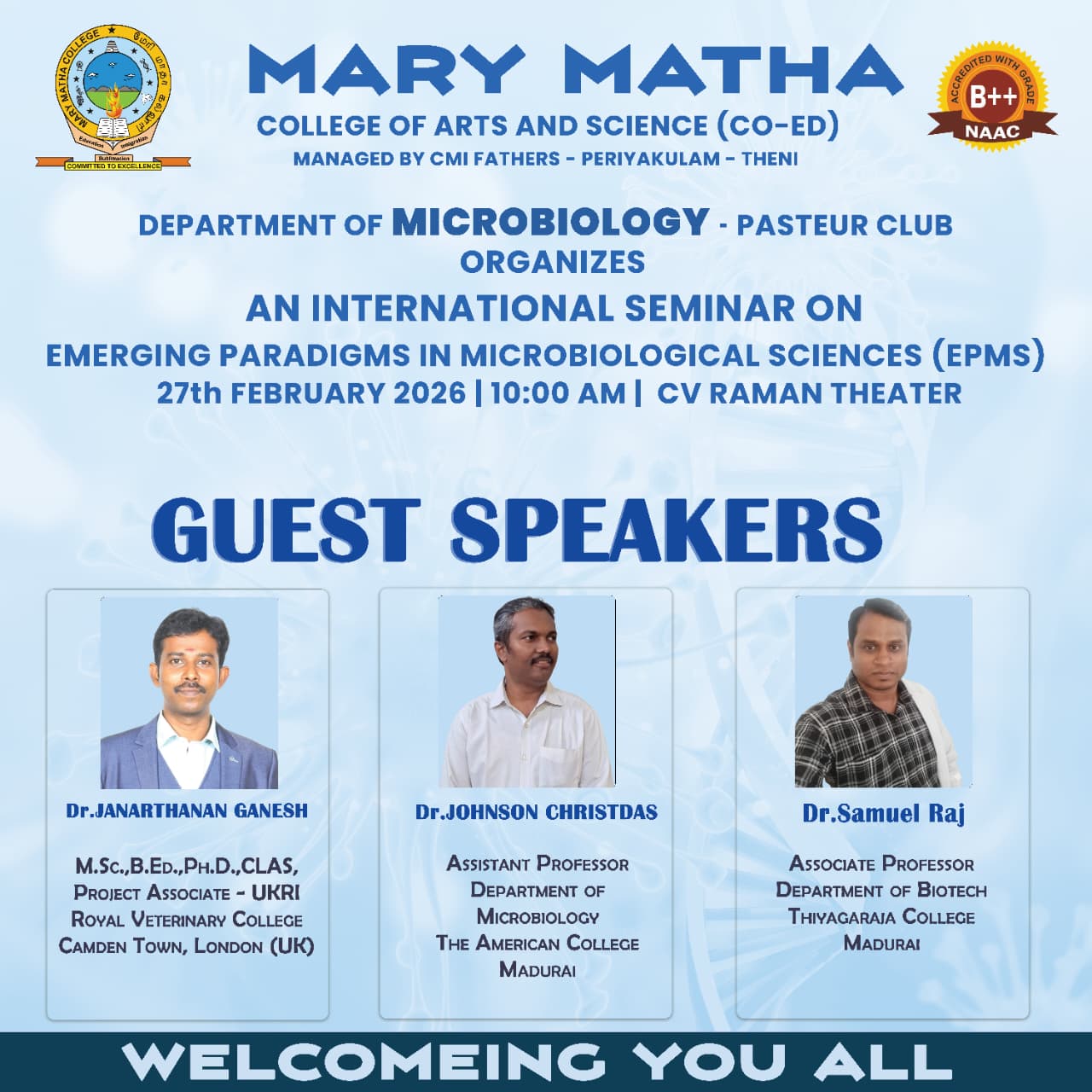
The Pasteur Club of the Department of Microbiology, Mary Matha College of Arts and Science (Co-Ed), affiliated to Madurai Kamaraj University, organized a One-Day International Seminar on “Emerging Paradigms in Microbiological Sciences (EPMS)” on 27th February 2026 at 10.00 A.M. in CV Raman Theatre with the following objectives.
The main objective was to enhance the knowledge in the field of recrnt advances in Microbiology
To guide them into research areas in food sciences, Molecular biology
To enhance knowledge about recent advances and emerging trends in microbiological sciences.
To create awareness about emerging and re-emerging microbial and viral pathogens affecting global public health. To understand food safety practices and the role of microbiology in preventing food-borne diseases, especially in poultry handling.
To promote scientific thinking and research interest among students in the field of microbiology and biotechnology.
To explore innovative applications of microorganisms, such as microbial fuel cells and microbial electrolysis cells for sustainable energy production.
To encourage interaction between students, researchers, and experts to share knowledge and research experiences in microbiological sciences.
To highlight the role of microbiologists in disease prevention, environmental protection, and global health preparedness.
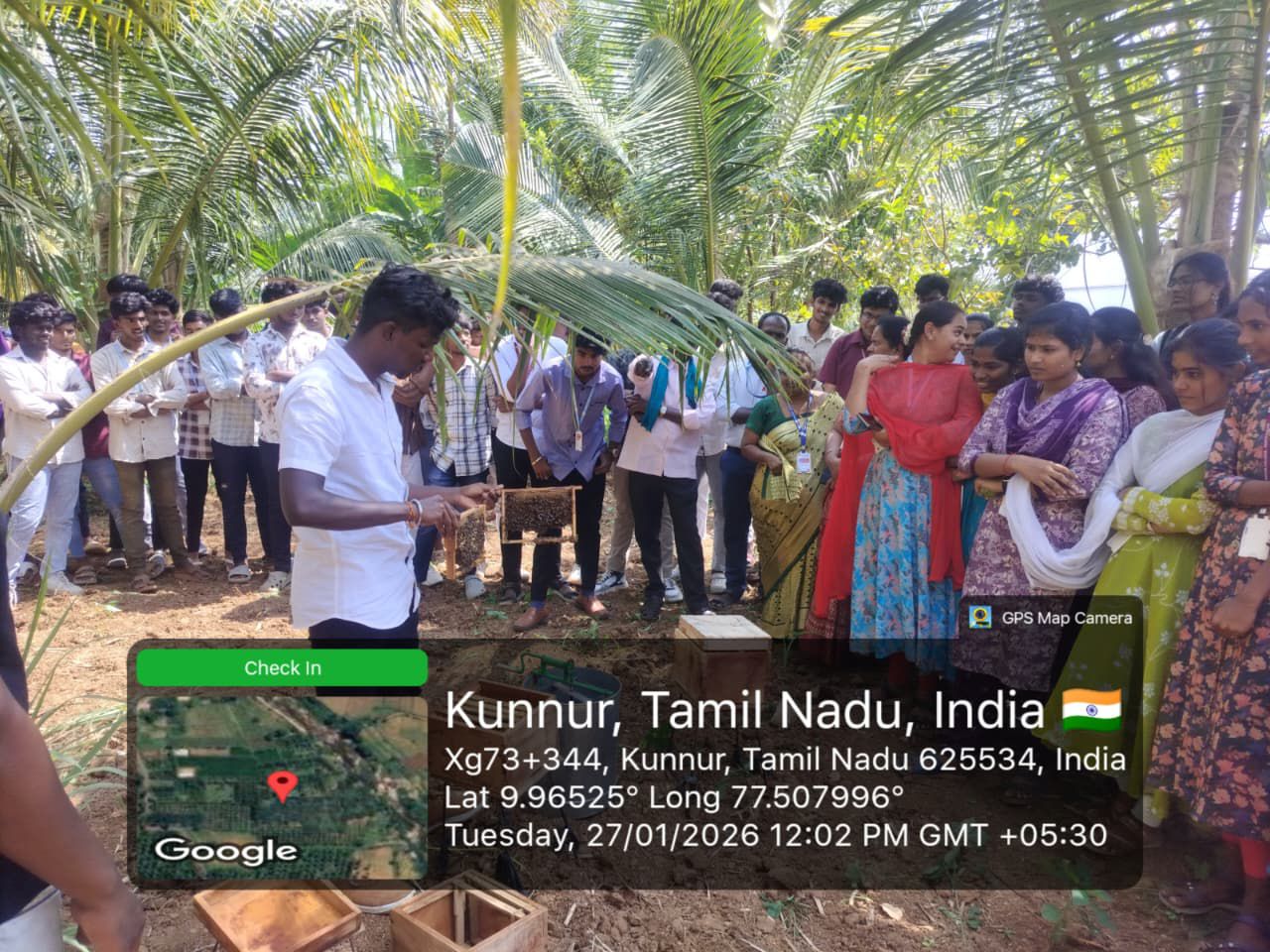
Objective of the Field Visit The primary objective of the field visit was to provide students with practical exposure to sericulture and apiculture practices, thereby bridging the gap between theoretical knowledge and real-world applications.
The visit aimed to enhance students’ understanding of biological processes, sustainable agricultural practices, and their relevance to microbiology and biotechnology.
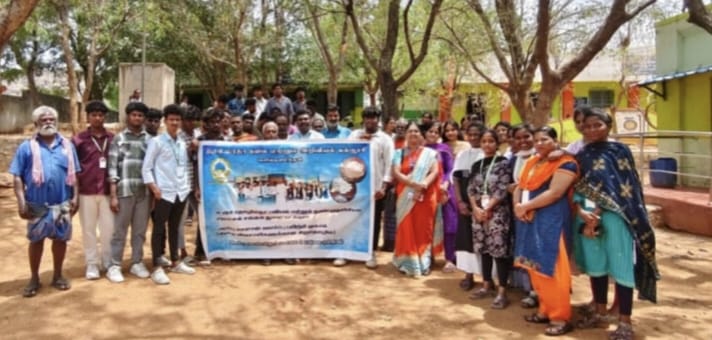
An One-Day Entrepreneurship Training Programme in Sericulture and Apiculture was organized by the Department of Microbiology, Mary Matha College of Arts and Science (Co-Ed) under the Pasteur Club on 12 December, 2025.
The programme was conducted with the objective of creating awareness about self-employment opportunities and encouraging entrepreneurial skills among students in the areas of sericulture and apiculture.
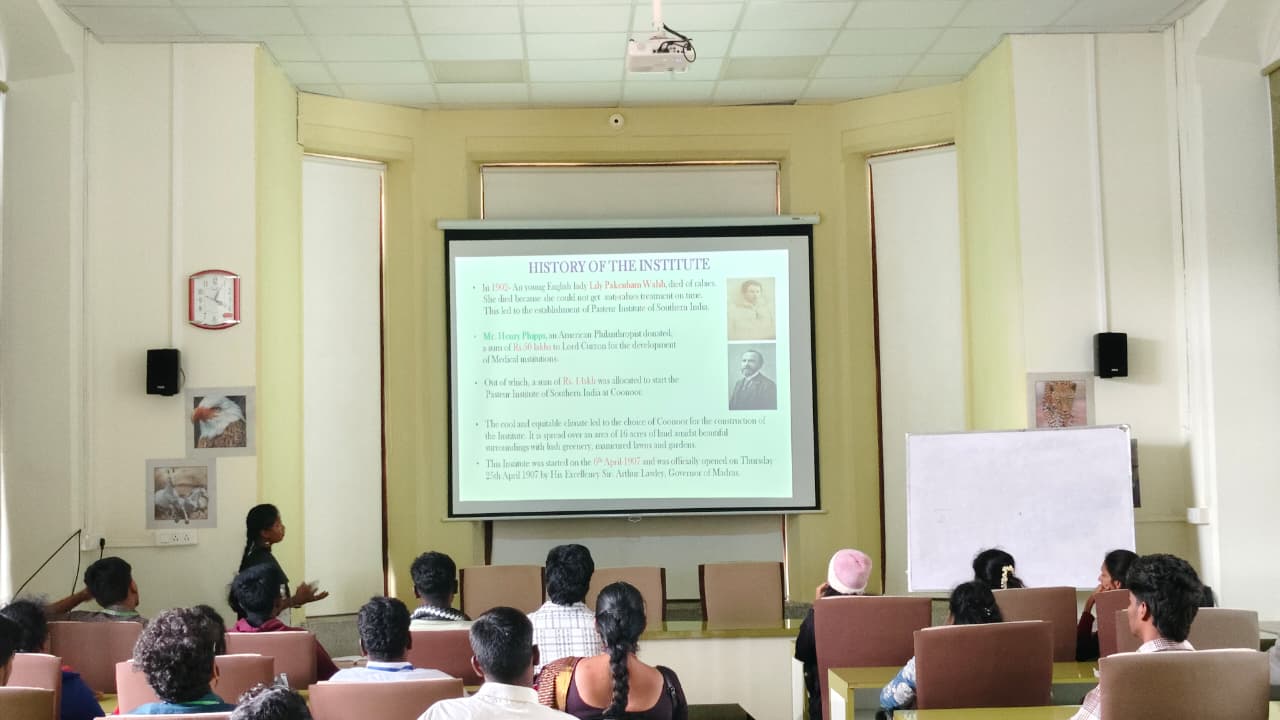
Industrial visit on 29 September, the Microbiology students and staff members undertook an educational visit to the Pasteur Institute, Ooty, as part of our academic curriculum to gain practical exposure and firsthand knowledge of microbiological research, public health services, and diagnostic laboratory practices.
The visit was well planned and aimed at bridging the gap between theoretical learning and real-time laboratory applications.
Upon arrival at the institute, the officials and technical staff, who briefed us about the historical background and importance of the Pasteur Institute in the field of microbiology and public health, warmly received us.
The institute is well known for its contribution to vaccine production, diagnostic services, and research activities, especially in relation to infectious diseases.
The orientation session provided valuable insight into the role of the institute in disease surveillance, prevention, and control at both regional and national levels.
A special training camp on Vermicomposting was conducted on 03rd September 2025 at Kamankallur village, covering the Kadamalai and Mayilai Union areas.
The camp aimed to create awareness among farmers about sustainable agriculture and provide hands-on training in vermicompost preparation.
On behalf of the Department of Microbiology, Mary Matha College of Arts and Science, our team explained the steps of vermicompost preparation and its benefits in simple terms. Farmers were also given practical demonstrations on compost pit preparation, earthworm selection, and compost harvesting.
More than 20 farmers participated enthusiastically and expressed interest in adopting vermicomposting as an eco-friendly, low-cost practice to improve soil health and crop yield.
Staff Profiles
Other Staff Profiles
Staffs from other departments taking class for English, Part-1 Languages and other cross-major subjects.
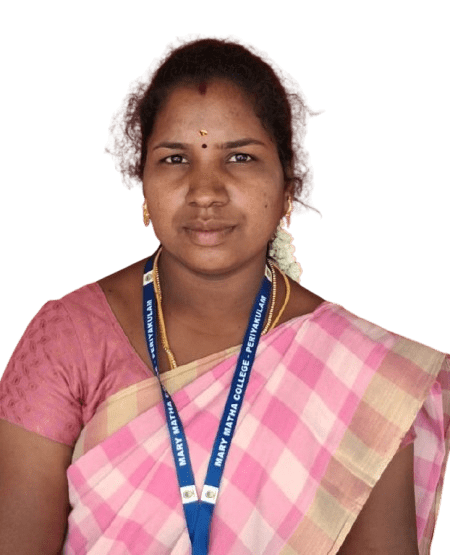
MRS. B. SUJITHA
Assistant Professor, Dept. of
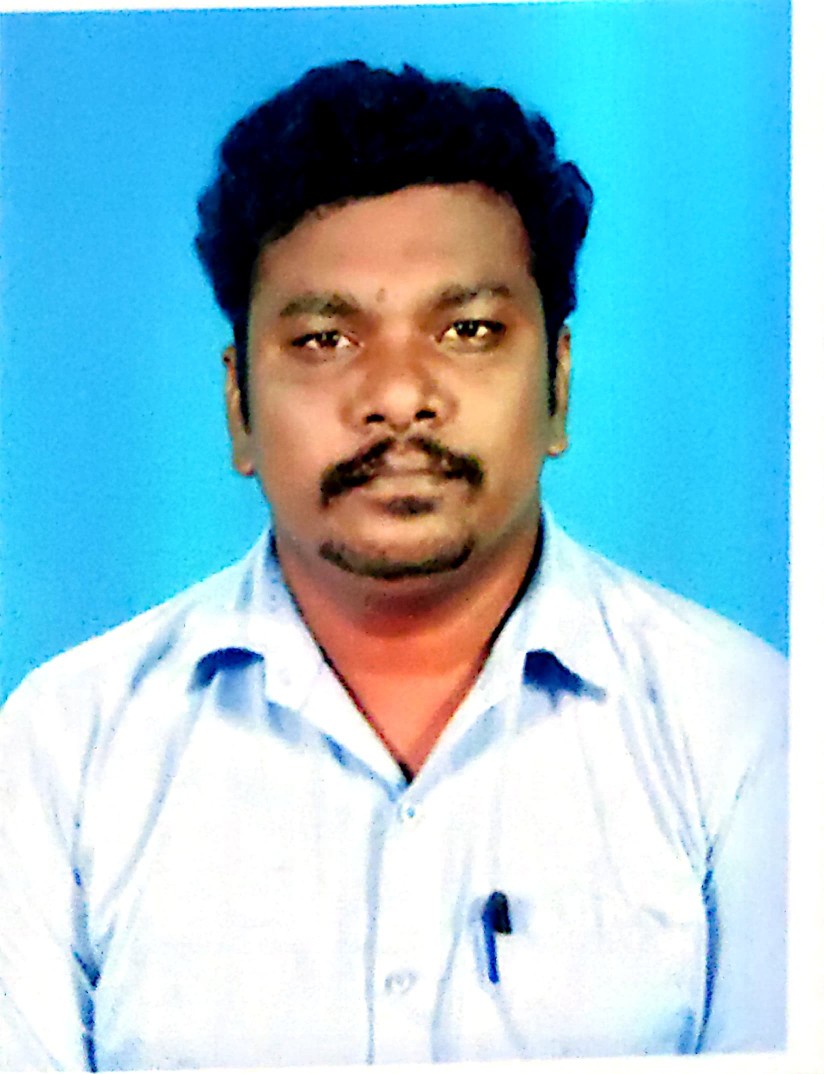
MR. RAVI KUMAR
Assistant Professor, Dept. of
MRS. V. MUTHUKALANCHIYAM
Assistant Professor, Dept. of
DR. POTHIARAJ G
Assistant Professor, Dept. of
B.Sc. Microbiology
This three year Bachelor of Science course in Microbiology deals with the study of microorganisms comprising Bacteria, Fungi, Protozoans, Algae and Virus; and its association with the environment, plants, animals and humans. Candidates undertaking this curriculum will understand the basic and applied concepts of Microbiology. This includes the beneficial and harmful role of microorganism in the production of commercially important products and its role in various diseases respectively. Basic concepts of Immunology of the host and its interaction with infectious microorganisms are also included in the syllabus. The scope of this course is wide which enables the candidate to get placed in diagnostics, pharma, fermentation, dairy, food and medical arena.
Eligibility for admission:
A candidate who has passed Higher Secondary examination (10+2) conducted by the Board of Higher Secondary Education, Govt. of Tamil Nadu or any other examinations accepted as Equivalent thereto by the syndicates subject to such conditions:
Biology/Physics/Chemistry as subjects in the Higher Secondary education.
Candidates should have secured at least 60% in the above subjects individually and as total aggregates.
A relaxation of 10% marks in the aggregate shall be given to SC/ST candidates.
Duration of the programme:
The students will undergo the prescribed course of study for a period of not less than three academic years (six semesters)
The maximum duration for completion of the UG Program shall not exceed twelve semesters, beyond which the candidate has to get readmitted in the course with the new syllabus if any.
Medium of Instructions: English
Objectives of the Programme
To inculcate the basic and advanced concepts of Microbiology including taxonomy, physiology, Immunology, biomolecule interactions, genomics, proteomics and rDNA technology.
To impart the scope for the application of concepts learned in the subject.
To introduce about the recent advances in the field of Microbiology and its importance in research.
Outcome of the programme:
At the end of this three year course, a candidate will have a thorough understanding on the basic concepts of Microbiology and its applications in the various fields of science and technology. Through the knowledge and hands-on experience imparted during the practical subjects, the candidate will get conveniently placed in the diagnostics, production and R&D units of various hospitals and industries respectively. This course will also lay a strong foundation to build the individual research caliber in the aspirants of Bachelor of Science in Microbiology.