


MMC Anti-Ragging Cell
College Ragging: Laws, Punishments, and Prevention
What is Ragging?
Ragging is any act that causes physical, psychological, or emotional harm to a student, especially newcomers, through bullying, harassment, or humiliation. It can involve verbal, physical, or sexual abuse, forcing students into inappropriate actions, or creating a fear-driven environment.
Types of Ragging:
- Verbal Ragging – Using abusive language, insulting, or forcing a junior to say or do something embarrassing.
- Psychological Ragging – Mental harassment through threats, intimidation, or isolation.
- Physical Ragging – Forcing a student to perform physical tasks, harming them, or any form of physical assault.
- Sexual Ragging – Forcing someone into inappropriate activities or making sexually explicit comments.
- Cyber Ragging – Bullying, harassment, or humiliation through social media, messages, or emails.
Laws Against Ragging in India:
To eliminate ragging from colleges, the Indian government has introduced strict anti ragging laws:
UGC Regulations on Curbing Ragging (2009)
- All colleges must have an anti-ragging committee and a squad to handle cases.
- Students and parents must submit an anti-ragging affidavit.
- Colleges must display anti-ragging helpline numbers and spread awareness.
- Ragging incidents must be reported immediately, and action should be taken within 24 hours.
State-Specific Laws
Some states have their own anti-ragging laws, like the Tamil Nadu Prohibition of Ragging Act, 1997, which prescribes up to 3 years of imprisonment and fines up to ₹25,000 for offenders.
Punishments for Ragging:
Students found guilty of ragging can face:
- Rustication (temporary suspension) or expulsion from college.
- Debarment from exams, placements, or scholarships.
- Legal action, including imprisonment (up to 10 years in extreme cases).
- Fines ranging from ₹10,000 to ₹50,000.
How to Report Ragging?
- National Anti-Ragging Helpline: 1800-180-5522
- Email: helpline@antiragging.in
- Website: https://www.antiragging.in
- College Authorities: Contact the college’s anti-ragging Cell via email - antiragging@marymathacollege.edu.in.
- Police: In case of extreme ragging, file an FIR at the nearest police station.
Prevention Measures in Colleges:
- Strict Anti-Ragging Committees: Colleges must ensure a strong monitoring system.
- Awareness Programs: Conduct seminars, pledge-taking, and awareness posters.
- CCTV Surveillance: Install cameras in hostels and public areas.
- Mentorship Programs: Seniors should be trained to guide juniors positively.
- Zero-Tolerance Policy: Any ragging incident must be acted upon immediately.
Click Here to File Online Complaint
Student Representatives:
- Ms. Abirami S., B.Com. Computer Applications
- Mr. Gopinath P., BCA
- Mr. Hariharan N., B.Sc. IT
- Ms. Prasannadevi K., B.Sc. Microbiology
- Mr. Dinesh Kumar, B.A. English
| Sr. No. | Name | Designation | Contact |
|---|---|---|---|
| 1 | MR. HEMRAJ | Coordinator | hemraj@marymathacollege.edu.in |
| 2 | MRS. S. NARMADHA DEVI | Associate Coordinator | narmadhadevimca@gmail.com |
| 3 | DR. S. DHARMAR | Coordinator | dharmarsaro@gmail.com |
| 4 | DR. J. JENIFER ANNIS CHRISTY | Member | annisjoseph97@gmail.com |
| 5 | DR. J. PRAWIN | Member | prawin@marymathacollege.edu.in |
| 6 | DR. POTHIARAJ G | Member | pothiarajgp@gmail.com |
| 7 | DR. S. JOSEPH XAVIER | Member | profdrsjosephxavier@gmail.com |
| 8 | DR. THAMIMUL ANSARI. P | Member | thamimulansari943@gmail.com |
| 9 | DR. Y. IMMANUEL NELSON | Member | sharonroja.nelson@gmail.com |
| 10 | MR. C. ANANTH | Member | masterananth84@gmail.com |
| 11 | MR. FRANCIS ANTONY J. | Member | francisjmsw@gmail.com |
| 12 | MR. P.C. DORAI RAMA CHIDAMBARAM | Member | pcdorai@marymathacollege.edu.in |
| 13 | MS. K. G. CHANDINI | Member | chandini_gokul@yahoo.co.in |
| 14 | MS. LAKSHMI SHRI R | Member | lakshmishriramaraj@gmail.com |
Recent Events

The Anti-Ragging Cell of our college organized an Awareness Programme on Anti-Ragging on 10th December 2025 at Mother Theresa Hall with the objective of promoting a safe, respectful, and inclusive campus environment. The programme was coordinated and organized by Mr. Ravi Kumar, Assistant Professor, Department of Tamil, who serves as the Coordinator of the Anti-Ragging Cell. The session emphasized the importance of maintaining discipline, mutual respect, and harmony among students. The speaker highlighted the legal implications of ragging, the psychological impact it can have on victims, and the strict institutional measures in place to prevent such incidents. Students were sensitized about their rights and responsibilities, the importance of empathy, and the need to uphold the dignity of every individual on campus. The programme also encouraged students to report any instances of ragging without fear, assuring confidentiality and prompt action. The awareness session concluded with a strong message that ragging in any form will not be tolerated, reinforcing the institution’s commitment to providing a secure and supportive learning environment for all.
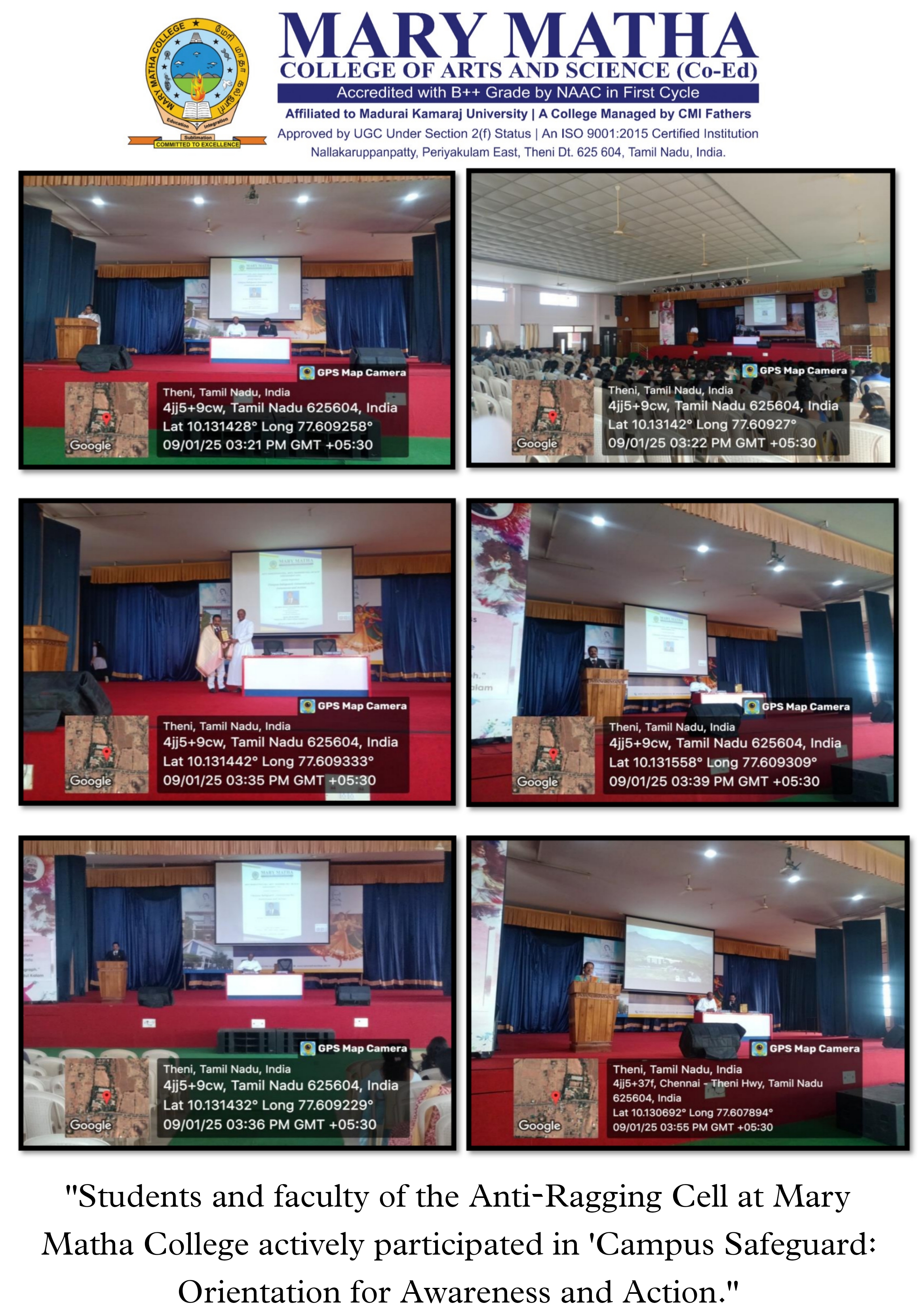
The primary goal of the workshop was to educate students, faculty, and staff about the serious issue of ragging, raise awareness about its detrimental effects, and encourage active participation in the prevention of such activities within the college campus. The workshop aimed at creating a safe and welcoming environment for all students, especially the newcomers, by ensuring that they understand their rights and responsibilities in maintaining a harmonious campus atmosphere.